
Ingredients
- 3 cups all-purpose flour
- 1 teaspoon salt
- 1 teaspoon sugar
- 1 teaspoon instant yeast
- 1 tablespoon olive oil or vegetable oil
- 1 cup warm water, approximately
- 2 tablespoons plain yogurt
For Brushing
- 1–2 tablespoons melted butter
- Optional: chopped fresh parsley or cilantro
- Optional: minced garlic
Step 1: Combine the Dry Ingredients
Add the flour, salt, sugar, and instant yeast to a large mixing bowl.
Whisk or stir everything together so the ingredients are evenly distributed.
Step 2: Add the Wet Ingredients
Add the yogurt and oil.
Gradually pour in the warm water while mixing with a wooden spoon or your hands.
Don’t add all the water at once. You may need slightly more or less depending on your flour.
The dough should become soft and slightly sticky.
Step 3: Knead the Dough
Transfer the dough to a lightly floured surface.
Knead for about 7–10 minutes.
Continue kneading until the dough becomes smooth, soft, and elastic.
If it feels extremely sticky, add a little flour. Avoid adding too much because a very floury dough can produce tough flatbread.
Step 4: Let the Dough Rest
Place the dough in a lightly oiled bowl.
Cover it with a clean kitchen towel or plastic wrap.
Let it rest for about 1 hour, or until it becomes noticeably larger and softer.
If your kitchen is cool, it may need additional time.
Step 5: Divide the Dough
Transfer the dough to your work surface.
Divide it into 8 equal portions.
Shape each portion into a smooth ball.
Cover the dough balls and let them rest for another 10–15 minutes.
This makes them much easier to roll.
Step 6: Roll the Flatbreads
Lightly flour your work surface.
Take one dough ball and roll it into a thin round, approximately 7–8 inches wide.
Don’t worry if every flatbread isn’t perfectly circular.
Keep the remaining dough covered while working so it doesn’t dry out.
Step 7: Heat the Pan
Place a heavy skillet or cast-iron pan over medium-high heat.
Allow it to become properly hot before cooking.
You don’t need to add oil to the pan.
Step 8: Cook the Flatbread
Place one rolled flatbread onto the hot skillet.
Cook for approximately 30–60 seconds, or until bubbles begin appearing on the surface.
Flip it over.
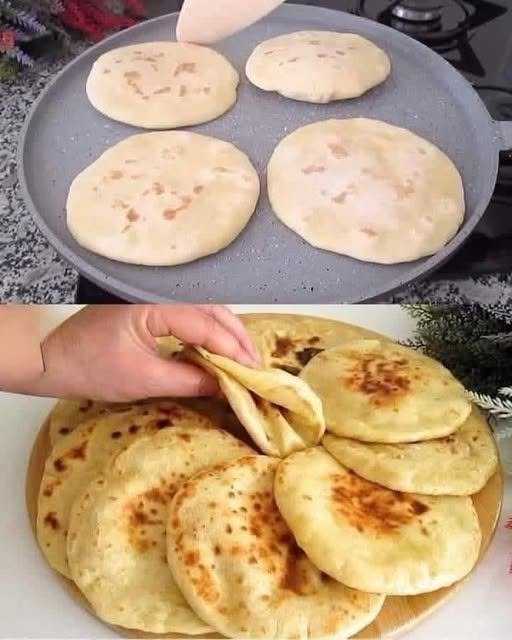
Cook the other side until golden-brown spots develop.
You can gently press larger bubbles with a spatula to help the flatbread cook evenly.
Each flatbread generally takes only a couple of minutes.
Step 9: Keep Them Soft
Transfer each cooked flatbread to a clean plate.
Immediately brush it with melted butter.
Stack the cooked flatbreads on top of one another and cover them with a clean kitchen towel.
Keeping them covered traps a little steam and helps maintain their soft texture.
Garlic Butter Version
For delicious garlic flatbread, mix:
- 2 tablespoons melted butter
- 1 minced garlic clove
- 1 tablespoon chopped parsley or cilantro
Brush the mixture over the hot flatbreads immediately after cooking.
Tips for Soft Flatbread
Use Warm Water
Warm water helps create a soft dough. Avoid extremely hot water.
Don’t Add Too Much Flour
A soft dough produces softer flatbread. Adding excessive flour can make the finished bread dry and stiff.
Let the Dough Rest
Resting allows the gluten to relax, making the dough easier to roll.
Cook on a Hot Pan
A properly heated skillet helps the flatbread cook quickly and develop attractive golden spots.
Cover After Cooking
This is one of the easiest ways to keep homemade flatbread soft.
Serving Ideas
Serve these flatbreads with:
- Chicken curry
- Beef curry
- Lentil dal
- Butter chicken
- Grilled chicken
- Kebabs
- Hummus
- Garlic dip
- Creamy sauces
- Scrambled eggs
- Roasted vegetables
They also make excellent wraps. Fill one with cooked chicken, lettuce, cucumber, tomatoes, and your favorite sauce.
Storage
Allow leftover flatbreads to cool completely.
Stack them together and place them in an airtight container or food-storage bag.
They can be refrigerated for several days.
For longer storage, wrap them well and freeze them. Reheat them in a dry skillet for a short time, or warm them gently before serving.
Final Result
The finished flatbread should be soft, flexible, lightly chewy, and golden in spots. Brushing the hot bread with butter gives it extra flavor and helps keep the surface tender.
Once you make homemade flatbread, you may find yourself making it regularly because it’s so much fresher and softer than many packaged versions.