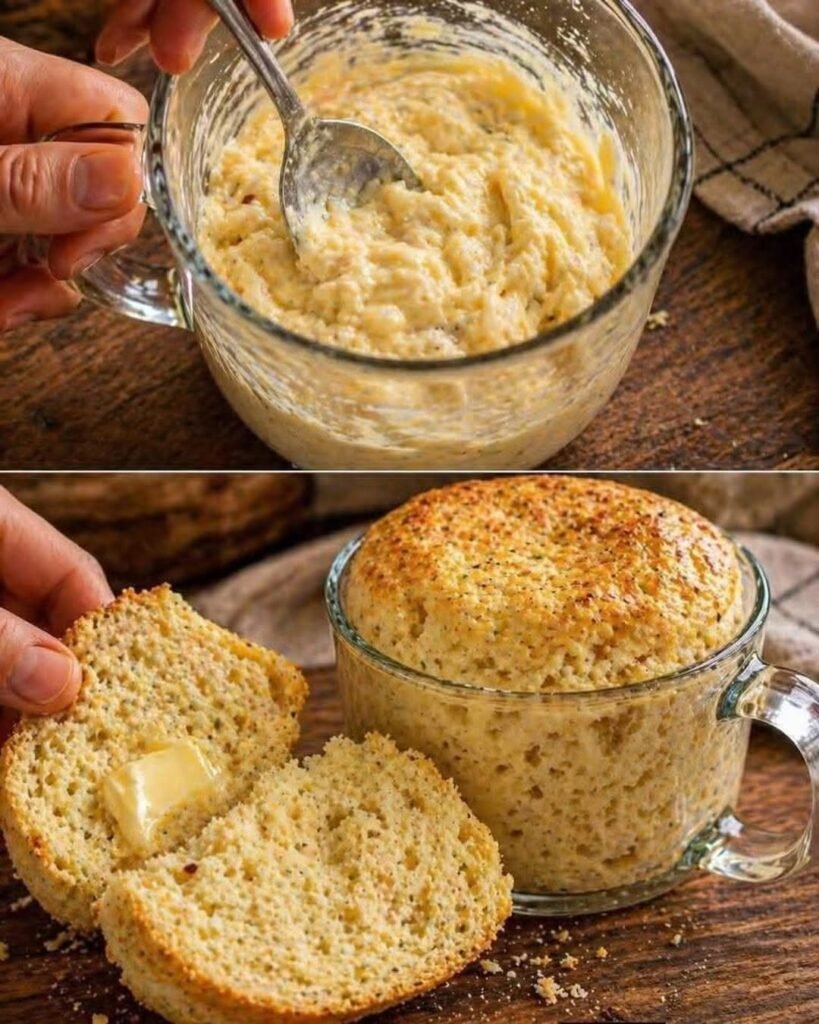

Ingredients
Gather the following ingredients before you begin. Using the correct proportions helps the bread hold its shape while keeping the texture soft and airy.
2 large egg whites
Egg whites provide structure and protein without the fat found in egg yolks. They help the bread rise and create a light texture.
2 tablespoons unflavored whey protein isolate
This provides a bread-like consistency without wheat flour. Choose an unflavored variety with zero or negligible carbohydrates on the nutrition label. Protein powders vary, so check the ingredients.
¼ teaspoon baking powder
Baking powder helps the mug bread puff up during cooking.
1 teaspoon melted butter or olive oil
This adds moisture and improves the flavor. For the lowest possible carbohydrate content, use plain butter or pure olive oil.
A small pinch of salt
Salt balances the flavor and gives the bread a more traditional savory taste.
Optional additions: A pinch of garlic powder, dried rosemary, or dried oregano can make the bread more flavorful. These seasonings add small amounts of carbohydrates, depending on how much you use.
Step-by-Step Instructions
Step 1: Prepare your mug
Choose a microwave-safe mug with enough room for the mixture to expand. Lightly grease the inside with butter or olive oil. This prevents sticking and makes it easier to remove the finished bread.
Step 2: Whisk the egg whites
Place the two egg whites in a small bowl and whisk them with a fork or small whisk until they become slightly foamy. There is no need to beat them into stiff peaks, but incorporating some air can help make the bread lighter.
Step 3: Add the dry ingredients
Add the whey protein isolate, baking powder, and salt. Mix thoroughly until no dry powder remains. The mixture should look smooth and slightly thick. Avoid adding too much protein powder because it can make the bread rubbery.
Step 4: Add the fat
Stir in the melted butter or olive oil. If you are using garlic powder or dried herbs, add them now. Mix gently until the ingredients are evenly distributed.
Step 5: Fill the mug
Pour the mixture into your greased mug. Make sure the mug is not more than half to two-thirds full, leaving enough room for the bread to rise without overflowing.
Step 6: Microwave the bread
Microwave on high for approximately 60–90 seconds. Cooking times vary depending on your microwave and mug size, so start with 60 seconds and check the center. If the mixture remains wet, cook in additional 10–15-second intervals until set.
Step 7: Let it rest
Carefully remove the hot mug from the microwave using an oven mitt. Allow the bread to rest for about one minute. Run a butter knife around the edge and gently turn it out onto a plate. Make sure the center is fully cooked before eating.
Step 8: Slice and serve
Slice the bread horizontally for a sandwich or cut it into smaller pieces. For a more traditional bread texture, toast the slices in a dry skillet for one to two minutes per side until lightly golden.
Tips for the Best Zero-Carb Mug Bread
- Avoid overcooking. Protein-based bread can become dry or chewy if microwaved for too long. Short cooking intervals help you achieve the best texture.
- Choose the right protein powder. Unflavored whey protein isolate is a useful option, but some brands brown differently or become rubbery when heated. A small test batch can help you find the right brand.
- Let it cool briefly. The bread becomes easier to slice after resting for a minute or two.
- Toast for a better crust. Microwaving creates a soft texture, while pan-toasting adds a firmer outside and improves the flavor.
- Keep the mixture simple. Milk, ordinary flour, honey, and sweetened protein powders can increase the carbohydrate count considerably.
Serving Suggestions
This versatile bread works with both simple and hearty toppings.
- For breakfast: Serve warm with butter and a fried egg.
- For a sandwich: Add grilled chicken, lettuce, cheese, and a little mayonnaise after checking the labels for hidden carbohydrates.
- For a savory snack: Spread a small amount of butter over toasted slices and add salt or dried herbs.
- For a burger bun: Shape the mixture in a wider, shallow microwave-safe bowl to create a rounder piece of bread.
- For a crunchy side: Slice the cooked bread thinly and toast it in a skillet until the edges are firm.
For the lowest-carb version, use plain, unsweetened ingredients and avoid sweet sauces or processed toppings containing added sugars.
Nutrition Information
The following figures are approximate estimates for one mug bread made with two egg whites, whey protein isolate, one teaspoon of butter, baking powder, and salt.
| Nutrient | Estimated amount |
|---|---|
| Calories | 100–140 kcal |
| Protein | 20–25 g |
| Fat | 4–6 g |
| Total carbohydrates | 1–3 g |
| Fiber | 0 g |
| Net carbohydrates | 1–3 g |
Actual values depend on the protein powder brand and ingredient quantities. Check the nutrition labels for a more accurate calculation. If you need to follow a medically prescribed carbohydrate limit, count the actual carbohydrates rather than assuming the recipe is carb-free.
Frequently Asked Questions
1. Is this mug bread really zero-carb?
Not necessarily. Egg whites and protein isolate contain small amounts of naturally occurring carbohydrates depending on the product. This recipe is better described as very low-carb. If you need a strict zero-carb result, verify every ingredient’s nutrition information and serving size.
2. Can I make it without protein powder?
Yes, but the texture will be different. You can experiment with egg whites alone, though the result will be more like a cooked egg foam than conventional bread. Protein powder gives this version more structure.
3. Why did my mug bread become rubbery?
The most common reasons are overcooking, using too much protein powder, or choosing a protein powder that becomes firm when heated. Reduce the cooking time and add short intervals until the center is set.
4. Can I cook it without a microwave?
Yes. Pour the mixture into a small greased, oven-safe ramekin and bake at 175°C (350°F) until set, checking after approximately 10–15 minutes. Cooking time will depend on the depth and size of the container.
5. Can I prepare it ahead of time?
It is best freshly made, but you can refrigerate leftovers in a sealed container and consume them within 3–4 days. Refrigerate promptly and reheat thoroughly. Toasting after reheating helps improve the texture.
Final Thoughts
This Zero-Carb Mug Bread Recipe is a practical alternative when you want something bread-like without using wheat flour. With egg whites, unflavored protein isolate, a little fat, and baking powder, you can make an individual serving in just a few minutes.
Enjoy it warm, toast it for a firmer texture, or use it as the base for your favorite low-carb sandwich. Most importantly, adjust the cooking time to your microwave and check ingredient labels if keeping carbohydrates as low as possible is your goal.