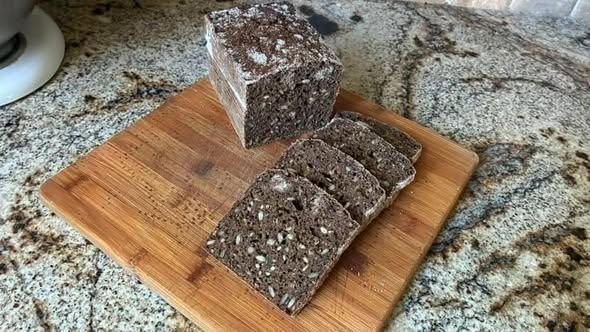

Absolutely — here’s a detailed ~1,00Ingredients
For the sourdough starter
- 100 g active rye sourdough starter
- 150 g whole rye flour
- 150 g lukewarm water
For the soaker
- 100 g cracked rye berries or rye chops
- 75 g sunflower seeds
- 50 g pumpkin seeds
- 40 g flaxseeds
- 250 g boiling water
- 1 teaspoon salt
For the final dough
- 300 g whole rye flour
- 100 g whole-wheat flour
- 300 g water
- 15 g dark malt syrup, molasses, or honey
- 12 g salt
- All of the prepared sourdough
- All of the cooled soaker
For the pan
- A little butter or neutral oil
- Extra rye flour, oats, or seeds for coating
Equipment
You will need a large mixing bowl, a kitchen scale, a loaf pan approximately 23 × 13 cm, a clean kitchen towel or plastic cover, and a cooling rack. A food thermometer is helpful but not essential.
Step 1: Prepare the Sourdough
The evening before baking, mix the active rye starter, rye flour, and lukewarm water in a bowl. Stir until no dry flour remains.
Cover the bowl loosely and leave it at room temperature for approximately 8–12 hours. The mixture should become noticeably expanded, bubbly, and pleasantly sour-smelling.
Rye sourdough can ferment faster than wheat sourdough, particularly in a warm kitchen, so keep an eye on it. The starter is ready when it is aerated and has developed a rounded, fermented aroma.
Step 2: Make the Soaker
At the same time, prepare the grain and seed mixture.
Place the cracked rye, sunflower seeds, pumpkin seeds, flaxseeds, and salt in a heatproof bowl. Pour the boiling water over everything and stir thoroughly.
Cover the bowl and let the mixture stand overnight.
Soaking is particularly important for Rugbrød. Rye grains and seeds absorb a considerable amount of water, and soaking them prevents them from drawing moisture out of the finished loaf. It also produces the characteristic moist, hearty texture associated with Danish rye bread.
By the next morning, the grains should have absorbed much of the water and become tender.
Step 3: Mix the Dough
The next day, combine the fermented sourdough and the soaked grain mixture in a large bowl.
Add the whole rye flour, whole-wheat flour, water, malt syrup or molasses, and salt. Mix thoroughly with a sturdy spoon or your hands until you have a thick, sticky dough.
Do not expect the dough to resemble a traditional wheat-bread dough. Rye contains much less gluten-forming protein than wheat, so there is no need for extensive kneading or stretching.
The mixture should be thick enough to hold its shape but still quite sticky and moist. If it seems extremely dry, add a tablespoon or two of water. If it looks unusually loose and soupy, add a small amount of rye flour.
Step 4: Prepare the Loaf Pan
Grease a loaf pan generously with butter or neutral oil.
Sprinkle the inside with rye flour, rolled oats, or seeds. This prevents sticking and gives the finished bread an attractive coating.
Transfer the dough to the prepared pan. Wet your hands or a spatula and press the dough firmly into the corners.
Smooth the surface as evenly as possible. You can sprinkle additional sunflower seeds, pumpkin seeds, or oats over the top.
Cover the pan loosely.
Step 5: Proof the Rugbrød
Allow the dough to rise at room temperature for approximately 2–5 hours.
The exact time depends heavily on the strength of your sourdough starter and the temperature of your kitchen. You are not looking for the dough to double in size. Instead, it should rise noticeably and develop small cracks or bubbles on the surface.
Do not overproof rye bread. If the dough rises dramatically and then collapses, the finished loaf may have a sunken top and a gummy interior.
A good indicator is a modest increase in volume accompanied by visible fermentation activity.
Step 6: Bake
Preheat your oven to 230°C (450°F).
Place the loaf in the oven and bake for approximately 15 minutes. Then reduce the temperature to 190°C (375°F) and continue baking for another 60–75 minutes.
The loaf should become deeply browned and firm.
Because Rugbrød is dense and moist, it benefits from a thorough bake. If you have an instant-read thermometer, the center should reach approximately 96–98°C (205–208°F).
If the top begins becoming too dark before the loaf is fully baked, cover it loosely with aluminum foil during the final part of baking.
Step 7: Cool Completely
Remove the bread from the pan and place it on a wire rack.
This is one of the most important steps: do not slice the bread while it is still warm.
Rye bread continues to set as it cools. Cutting into it too early can produce a sticky or gummy crumb.
Allow the loaf to cool for at least 12 hours, preferably overnight, before slicing.
Once completely cool, use a sharp serrated bread knife to cut thin slices.
How to Serve Danish Rugbrød
Traditional Rugbrød is usually served as the foundation for an open-faced Danish sandwich known as smørrebrød.
Try topping slices with:
- Butter and aged cheese
- Smoked salmon and cream cheese
- Pickled herring and onions
- Liver pâté with pickles
- Roast beef, horseradish, and crispy onions
- Sliced boiled eggs and mayonnaise
- Avocado, salt, and a squeeze of lemon
The bread’s slightly sour, earthy flavor pairs especially well with rich, salty, creamy, and pickled foods.
Storage
Because Rugbrød is naturally moist, it keeps well compared with many homemade wheat breads.
Once completely cool, wrap it in a clean cloth or place it in a breathable bread bag. Avoid sealing it in plastic while warm, as condensation can make the crust unpleasantly soft.
At room temperature, it should remain good for several days. For longer storage, slice the loaf and freeze the slices in an airtight freezer bag. Individual slices can then be thawed as needed.
Recipe Notes
For the best flavor, use a mature sourdough starter maintained with whole rye flour. The fermentation contributes much of the characteristic tang and complexity of Danish rye bread.
You can also adjust the seeds according to what you have available. Sunflower seeds are particularly traditional, while pumpkin seeds add extra crunch. Flaxseeds help contribute to the moist texture.
If you cannot find cracked rye, you can substitute rye flakes or coarsely chopped rye berries. Avoid replacing all of the rye with wheat flour—the distinctive character of Rugbrød comes from its high proportion of whole rye.
Most importantly, give the finished loaf enough time to cool and set before slicing. A properly baked Rugbrød should be dense but not gummy, moist but not wet, and pleasantly chewy with a deep rye flavor.
Quick Timeline
Evening: Prepare sourdough and soak grains and seeds.
Next morning: Mix final dough and place in loaf pan.
Late morning/afternoon: Proof for 2–5 hours.
Bake: Approximately 75–90 minutes.
Cool: At least 12 hours before slicing.
The patience is worth it: once fully matured and sliced thinly, homemade sourdough Rugbrød makes an exceptionally flavorful base for sandwiches and is a wonderful introduction to traditional Scandinavian baking. :::