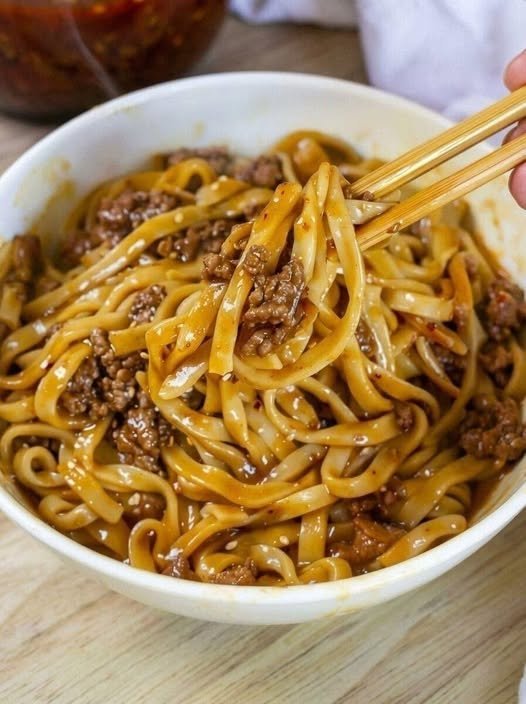

Ingredients
The following ingredients make four generous servings. For the best results, prepare and measure everything before you begin cooking because stir-frying happens quickly.
For the beef and noodles
- 450 g (1 lb) beef sirloin or flank steak, thinly sliced against the grain
- 300 g (10–11 oz) lo mein, egg, or wheat noodles
- 2 tablespoons cornstarch
- 2 tablespoons soy sauce, for marinating the beef
- 1 tablespoon neutral cooking oil
- 1 medium red bell pepper, thinly sliced
- 1 medium carrot, julienned
- 1 cup broccoli florets, optional
- 4 green onions, sliced
- 1 tablespoon sesame seeds, for garnish
For the savory Mongolian sauce
- ¼ cup soy sauce
- ¼ cup beef broth or water
- 2 tablespoons hoisin sauce
- 1–2 tablespoons brown sugar, adjusted to taste
- 1 tablespoon oyster sauce, optional
- 1 tablespoon rice vinegar
- 1 teaspoon sesame oil
- 4 garlic cloves, finely minced
- 1 tablespoon fresh ginger, grated
- ½ teaspoon red pepper flakes, optional
- 1 teaspoon cornstarch mixed with 1 tablespoon cold water
These ingredients create a thick, flavorful sauce that clings beautifully to the beef and noodles. Use low-sodium soy sauce if you prefer a less salty dish.
Step-by-Step Instructions
Step 1: Prepare and marinate the beef
Pat the beef dry with paper towels and slice it thinly against the grain. Cutting against the grain shortens the muscle fibers, helping the meat become tender when cooked.
Place the beef in a bowl and add 2 tablespoons of soy sauce and 2 tablespoons of cornstarch. Toss until every strip is lightly coated. Let it rest for 10–15 minutes while you prepare the remaining ingredients.
Step 2: Cook the noodles
Bring a large pot of water to a boil. Add the noodles and cook according to the package instructions until just tender.
Drain the noodles and rinse briefly with cool water if they tend to stick together. Toss with a small amount of oil and set aside. Avoid overcooking them because they will finish cooking in the sauce.
Step 3: Sear the beef
Heat the cooking oil in a large wok or skillet over medium-high to high heat. Once the pan is hot, arrange the beef in a single layer, working in batches if necessary.
Cook for approximately 2–3 minutes per side, depending on thickness, until nicely browned and cooked through. Transfer the beef to a plate. Avoid overcrowding the pan, as excess moisture can cause the meat to steam instead of sear.
Step 4: Make the savory sauce
In a small bowl, whisk together the soy sauce, beef broth, hoisin sauce, brown sugar, oyster sauce if using, and rice vinegar.
Using the same wok, add the garlic and ginger and stir for about 30 seconds until fragrant. Add the bell pepper, carrot, and broccoli. Stir-fry for 3–4 minutes, keeping the vegetables slightly crisp.
Pour in the prepared sauce and bring it to a gentle simmer. Stir in the cornstarch slurry and cook briefly until the sauce becomes glossy and slightly thickened.
Step 5: Combine the beef and noodles
Return the cooked beef to the wok and add the drained noodles. Use tongs to toss everything together until the noodles are evenly coated and the beef is distributed throughout the dish.
Drizzle in the sesame oil and add the red pepper flakes if desired. Toss for another 1–2 minutes, adding a splash of water or broth if the sauce becomes too thick.
Step 6: Garnish and serve
Remove the wok from the heat. Sprinkle the noodles with sliced green onions and sesame seeds.
Serve immediately while hot, when the sauce is glossy, the beef is tender, and the noodles are full of flavor. Offer extra chili flakes or chili oil on the side for anyone who enjoys additional heat.
Tips for Perfect Mongolian Beef Noodles
Choose the right cut of beef. Flank steak and sirloin are excellent options because they slice easily and cook quickly. Always cut against the grain for a more tender texture.
Keep the pan hot. A hot wok creates flavorful browned edges on the beef and helps the vegetables retain their crunch. Cook in batches if your pan is small.
Balance the sauce. Soy sauce provides saltiness, hoisin adds depth, vinegar brings brightness, and brown sugar balances the stronger flavors. Taste before adding extra salt because soy sauce is already salty.
Avoid soggy noodles. Cook the noodles just until tender and drain them well. If the dish looks dry, add a little broth rather than pouring in more oil.
Customize the vegetables. Mushrooms, cabbage, snap peas, bok choy, and bean sprouts are all delicious additions. Add quick-cooking vegetables near the end so they retain their texture.
Delicious Variations
- Spicy Mongolian beef noodles: Add chili garlic sauce, fresh sliced chilies, or extra red pepper flakes.
- Extra-garlicky noodles: Increase the garlic to six cloves for a stronger, aromatic flavor.
- Healthier vegetable noodles: Increase the vegetables and use whole-wheat noodles if available.
- Chicken Mongolian noodles: Substitute thinly sliced chicken for beef and cook it thoroughly.
- Gluten-free version: Use certified gluten-free rice noodles, tamari, and gluten-free hoisin or an appropriate substitute.
Serving Suggestions
Serve these noodles as a complete meal or pair them with simple Asian-inspired sides. Steamed dumplings, cucumber salad, spring rolls, or stir-fried greens complement the rich sauce without overpowering it. For a lighter meal, serve smaller portions alongside steamed broccoli or bok choy.
The dish is best enjoyed fresh, but leftovers can be refrigerated in an airtight container for up to 3–4 days. Reheat in a skillet with a tablespoon or two of water until steaming hot throughout. Refrigerate leftovers within two hours of cooking, and avoid repeatedly reheating the entire batch.
Frequently Asked Questions
Can I make Mongolian beef noodles ahead of time?
Yes. You can slice the beef, prepare the sauce, and chop the vegetables a day ahead. Store them separately in the refrigerator. Cook the noodles and stir-fry everything shortly before serving for the best texture.
How can I make the sauce thicker?
Mix 1 teaspoon of cornstarch with 1 tablespoon of cold water and stir it into the simmering sauce. Allow it to bubble briefly until glossy. Add the mixture gradually if you prefer a thinner sauce.
Are Mongolian beef noodles very spicy?
Not necessarily. The base recipe is savory and mildly sweet rather than hot. Red pepper flakes are optional, so you can adjust the heat to suit your preferences.
Can I use spaghetti instead of Asian noodles?
Absolutely. Regular spaghetti works well as a substitute. Cook it until just al dente, drain it, and toss it with the beef and sauce.
Final Thoughts
Savory Mongolian Beef Noodles are a satisfying homemade meal that combines tender beef, perfectly cooked noodles, colorful vegetables, and a rich garlic-ginger sauce. With simple ingredients and straightforward steps, this recipe makes it easy to enjoy the bold flavors of Asian-inspired stir-fry at home.
The secret is to sear the beef properly, avoid overcooking the noodles, and balance the salty, sweet, and tangy elements of the sauce. Once you master the basic recipe, experiment with different vegetables, spice levels, and noodle varieties to make it your own.
Serve the noodles hot, garnish generously with green onions and sesame seeds, and enjoy a comforting, restaurant-style dinner with family or friends.