
Writing
Ingredients
Fresh Vegetables
- 1 medium carrot, grated
- 1 cup finely shredded cabbage
- 1/2 cup chopped spinach
- 1 small onion, finely chopped
- 1/2 small bell pepper, finely chopped
- 1 green chili, finely chopped (optional)
- 2 tablespoons chopped fresh coriander
Batter Ingredients
- 1/2 cup whole-wheat flour
- 1/4 cup chickpea flour (besan)
- 1 large egg, optional
- 1/2 cup water, or as needed
- 1/2 teaspoon baking powder, optional
- 1/2 teaspoon cumin powder
- 1/4 teaspoon black pepper
- 1/2 teaspoon salt, or to taste
- 1/4 teaspoon turmeric powder
- 1 teaspoon lemon juice
- 2 teaspoons olive oil or another cooking oil for the entire batch
Note: For a vegan version, simply omit the egg and add a little extra water as needed. Chickpea flour helps bind the vegetables, while whole-wheat flour provides a satisfying texture.
Step-by-Step Instructions
Step 1: Prepare the Vegetables
Wash all the vegetables thoroughly under running water. Peel and grate the carrot, shred the cabbage, chop the spinach, and finely dice the onion and bell pepper. Chop the coriander and green chili if using.
Try to cut the vegetables into small, evenly sized pieces. This helps them cook evenly and makes the pancakes easier to flip. If the vegetables contain too much moisture, gently squeeze the shredded cabbage and carrot to remove excess liquid.
Step 2: Mix the Dry Ingredients
In a large mixing bowl, combine the whole-wheat flour, chickpea flour, cumin powder, black pepper, salt, turmeric, and baking powder if desired.
Mix everything thoroughly so the spices are evenly distributed throughout the flour. These seasonings add plenty of flavor without requiring heavy sauces, butter, or extra calories.
Step 3: Add the Vegetables
Add the grated carrot, shredded cabbage, chopped spinach, onion, bell pepper, green chili, and coriander to the flour mixture.
Stir well until the vegetables are coated with the flour. Add the egg if you are using it, followed by the lemon juice and a little water.
Mix until you have a thick, spoonable batter. Add the remaining water gradually rather than pouring it in all at once. The batter should hold the vegetables together without becoming too runny.
If the batter seems watery, add a tablespoon of flour. If it is too thick, add one tablespoon of water at a time until you reach the desired consistency.
Step 4: Heat the Pan
Place a good-quality nonstick frying pan or skillet over medium-low to medium heat. Allow it to warm for a minute or two.
Lightly grease the pan with a small amount of olive oil. You can use a silicone brush to spread the oil evenly across the surface. Using a measured amount of oil helps control the calorie content of the finished pancakes.
Avoid overheating the pan because the outside may brown too quickly before the vegetables and batter cook completely.
Step 5: Shape the Pancakes
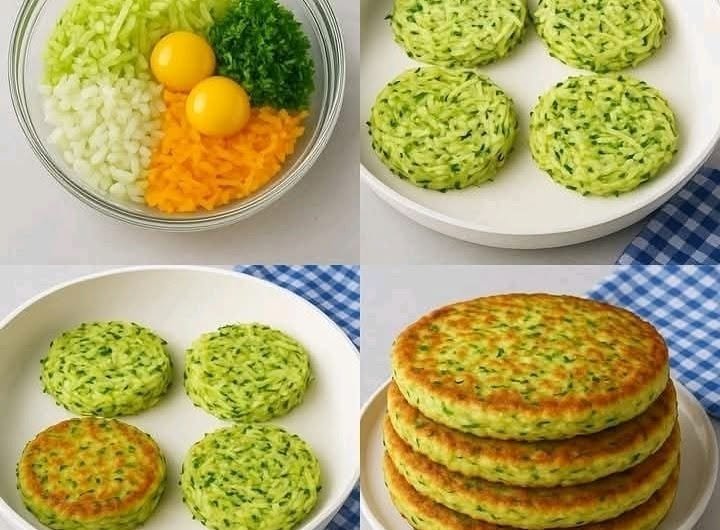
Spoon approximately two to three tablespoons of batter onto the warm pan for each pancake. Gently spread the mixture into a small, round shape about 1/4 inch thick.
Leave a little space between pancakes so they are easier to turn. Smaller pancakes are generally easier to flip and less likely to break apart.
Cook two or three pancakes at a time, depending on the size of your pan.
Step 6: Cook Until Golden
Cook the pancakes for approximately 3–4 minutes on the first side, or until the edges begin to look set and the bottom becomes golden brown.
Carefully slide a thin spatula underneath each pancake and flip it. Cook the second side for another 2–3 minutes, until golden and cooked through.
Adjust the heat as necessary. If the pancakes brown too quickly, lower the temperature. If they stick, allow them to cook a little longer before attempting to flip them.
Transfer the cooked pancakes to a plate and repeat with the remaining batter. Add only a small amount of additional oil if needed.
Step 7: Serve and Enjoy
Serve your vegetable pancakes warm with plain low-fat yogurt, homemade mint yogurt dip, or fresh tomato salsa.
For a more filling meal, pair them with a fresh cucumber salad or a bowl of vegetable soup. These pancakes also make a convenient lunchbox option and can be enjoyed at room temperature.
Nutritional Information
The following values are approximate and will vary according to the exact ingredients, oil used, and pancake size.
| Nutrient | Estimated amount per serving |
|---|---|
| Calories | 200–260 kcal |
| Protein | 8–11 g |
| Carbohydrates | 25–32 g |
| Dietary fiber | 4–6 g |
| Fat | 5–8 g |
The estimates assume the recipe makes four servings, with approximately two small pancakes per serving. If you make larger pancakes or use more oil, the calorie count will increase.
Tips for Making the Best Low-Calorie Vegetable Pancakes
1. Use plenty of vegetables. Vegetables add color, flavor, volume, and fiber while helping make the meal satisfying.
2. Measure the oil. Two teaspoons of oil for the whole batch help keep the recipe lighter than deep-fried vegetable fritters.
3. Avoid excess water. Watery batter can make pancakes difficult to flip. Drain the vegetables if necessary and add water gradually.
4. Choose whole-grain flour. Whole-wheat flour provides more fiber than refined white flour. Chickpea flour adds flavor and some additional protein.
5. Use a nonstick pan. A good nonstick skillet makes it possible to cook the pancakes with minimal oil.
6. Experiment with seasonings. Garlic powder, paprika, oregano, coriander powder, and a pinch of chili flakes can add variety without significantly increasing calories.
Healthy Variations
- Vegan vegetable pancakes: Leave out the egg and use chickpea flour with enough water to bind the ingredients.
- High-protein pancakes: Serve with plain Greek yogurt or add a little extra chickpea flour.
- Gluten-free pancakes: Replace the whole-wheat flour with a certified gluten-free flour blend or additional chickpea flour, adjusting the water as needed.
- Spicy vegetable pancakes: Add green chilies, crushed red pepper, or a little freshly ground black pepper.
- Cheese vegetable pancakes: Add a small quantity of grated low-fat cheese for a richer flavor, keeping in mind that this increases the calorie content.
Storage and Reheating
Allow leftover pancakes to cool before placing them in an airtight container in the refrigerator. Store them for up to 3–4 days. Reheat them in a nonstick skillet over low heat or in an oven until hot throughout.
You can also freeze the cooked pancakes for up to 2 months for convenient meals. Place baking paper between individual pancakes to prevent sticking, then thaw and reheat thoroughly before serving.
Frequently Asked Questions
Can I make vegetable pancakes without eggs?
Yes. Chickpea flour helps bind the vegetables, so the pancakes can be made without eggs. Add water gradually and allow the batter to rest for about five minutes before cooking.
Are vegetable pancakes good for weight management?
They can be a helpful part of a balanced eating plan because they provide vegetables, fiber, and some protein. Portion size, cooking oil, toppings, and the rest of your diet all influence the overall calorie intake.
Can I prepare the batter ahead of time?
It is best to cook the pancakes soon after preparing the batter because vegetables release moisture over time. You can chop the vegetables in advance and store them in the refrigerator, then mix the batter just before cooking.
What can I serve with vegetable pancakes?
Try plain yogurt, mint chutney, tomato salsa, cucumber salad, or a light vegetable soup. Choose sauces with little added oil or sugar to keep the meal relatively low in calories.
Conclusion
Healthy vegetable pancakes are a simple, colorful, and satisfying way to include more vegetables in your daily diet. Made with carrots, cabbage, spinach, whole-wheat flour, and chickpea flour, they offer a balance of fiber, carbohydrates, and protein without requiring deep-frying or heavy ingredients.
The recipe is easy to customize, suitable for busy mornings, and flexible enough for vegan and gluten-free variations. With a nonstick pan, measured oil, and fresh seasonings, you can enjoy golden, flavorful pancakes while keeping the meal relatively light.
Prepare a batch today and serve these nutritious vegetable pancakes with your favorite healthy dip for a delicious homemade meal that the whole family can enjoy.