
Ingredients
- 3 ½ cups (440 g) bread flour or strong white flour
- 1 ½ cups (360 ml) lukewarm water
- 2 teaspoons instant yeast
- 1 ½ teaspoons salt
- 1 teaspoon sugar, optional
- Extra flour for shaping
- Water for creating steam in the oven
Equipment
- Large mixing bowl
- Wooden spoon or dough scraper
- Baking tray
- Parchment paper
- Sharp knife or bread lame
- Clean kitchen towel
Step 1: Mix the Dough
Add the flour, instant yeast, and optional sugar to a large mixing bowl. Stir briefly to combine.
Pour in the lukewarm water gradually while mixing. Once most of the flour has absorbed the water, add the salt.
Mix until you have a rough, sticky dough. Don’t worry if it looks messy at this stage.
Step 2: Develop the Dough
Turn the dough onto a lightly floured surface.
Knead gently for about 8–10 minutes until the dough becomes smoother and more elastic. You can also use a stand mixer with a dough hook for about 5–7 minutes on low speed.
The dough should remain slightly sticky. Avoid adding too much flour because this can make the baguettes heavy.
Step 3: First Rise
Place the dough into a lightly oiled bowl and cover it with a clean kitchen towel or plastic wrap.
Leave it in a warm, draft-free place for about 1–1½ hours, or until it has roughly doubled in size.
For better flavor, you can place the dough in the refrigerator overnight and shape it the next day.
Step 4: Divide the Dough
When the dough has risen, gently turn it onto a lightly floured surface.
Avoid aggressively punching all the air out.
Divide the dough into 3 equal portions. If you want larger baguettes, divide it into 2 portions.
Step 5: Shape the Baguettes
Take one portion and gently flatten it into a rough rectangle.
Fold the top third toward the center and press lightly. Fold the bottom third upward and press again.
Then roll the dough gently from the center outward, creating a long, thin loaf.
Try to keep the thickness fairly even from end to end.
Repeat with the remaining pieces of dough.
Step 6: Second Rise
Place the shaped baguettes onto parchment paper, leaving space between them.
Cover loosely with a clean towel.
Let them rise for about 30–45 minutes.
They should look slightly puffy but don’t necessarily need to double in size.
Step 7: Preheat the Oven
While the baguettes are finishing their second rise, preheat your oven to 240°C (465°F).
Place a sturdy empty baking tray on a lower oven rack. This will be used to create steam.
A hot oven is important for developing the characteristic crisp baguette crust.
Step 8: Score the Baguettes
Just before baking, use a very sharp knife or bread lame to make 3–5 diagonal cuts along the top of each baguette.
Make the cuts fairly shallow and slightly overlapping.
Scoring gives the expanding bread a controlled place to open while baking.
Step 9: Create Steam
Carefully place the baguettes in the oven.
Pour a small amount of hot water into the preheated empty tray on the lower rack to create steam. Be extremely careful because the steam can cause burns.
Close the oven door quickly.
Steam helps keep the surface flexible during the first part of baking, allowing the baguettes to expand and develop a crisp crust.
Step 10: Bake
Bake the baguettes at 240°C (465°F) for about 10 minutes.
Then carefully remove the steam tray if practical and reduce the oven temperature to 220°C (425°F).
Continue baking for another 12–18 minutes, or until the baguettes are deeply golden brown and sound hollow when tapped underneath.
Baking times can vary depending on your oven and the size of the baguettes.
Step 11: Cool
Remove the baguettes from the oven and place them on a wire rack.
Let them cool for at least 20–30 minutes before slicing.
Although it can be tempting to cut into a hot baguette immediately, allowing it to cool helps the interior finish setting properly.
Tips for Perfect French Baguettes
1. Don’t Add Too Much Flour
The dough should be soft and slightly sticky. Adding lots of extra flour can produce a dense loaf.
2. Give the Dough Enough Time
Good baguettes need time to ferment and rise. If your kitchen is cool, the dough may need longer than the suggested times.
3. Use Strong Flour
Bread flour generally gives baguettes better structure and chew because it contains more protein than many ordinary flours.
4. Don’t Skip the Steam
Steam during the beginning of baking helps create a thin, crisp crust.
5. Score Quickly
Use a sharp blade and make confident cuts. Hesitating with the knife can flatten the dough.
6. Bake Until Deep Golden Brown
Don’t remove the baguettes too early. A well-baked baguette should have a rich golden-brown crust.
How to Serve Homemade Baguettes
Fresh baguettes are incredibly versatile. Slice them and serve with butter, jam, honey, or cheese.
They are also excellent alongside:
- French onion soup
- Tomato soup
- Vegetable soup
- Pasta
- Salads
- Roasted vegetables
- Chicken dishes
- Cheese boards
- Eggs and breakfast dishes
For a simple snack, slice the baguette, toast it lightly, and top it with butter and a little garlic.
Storage
Homemade baguettes are best on the day they are baked.
If you have leftovers, store them at room temperature in a paper bag or wrapped loosely in a clean kitchen towel. Avoid storing crusty bread in the refrigerator because refrigeration can make bread stale faster.
For longer storage, allow the baguette to cool completely, wrap it well, and freeze it.
To refresh a frozen baguette, allow it to thaw and then warm it in a hot oven for several minutes. This can help restore some of its crisp crust.
Why This Recipe Works
The beauty of a French baguette is that it doesn’t require complicated ingredients. The combination of flour, water, yeast, and salt creates the foundation.
The first rise allows fermentation and flavor development. Gentle shaping preserves some of the air created during fermentation. The second rise gives the shaped baguettes additional volume.
Finally, a very hot oven and steam create the contrast that makes a baguette special: a crisp, golden crust with a soft, airy interior.
Final Result
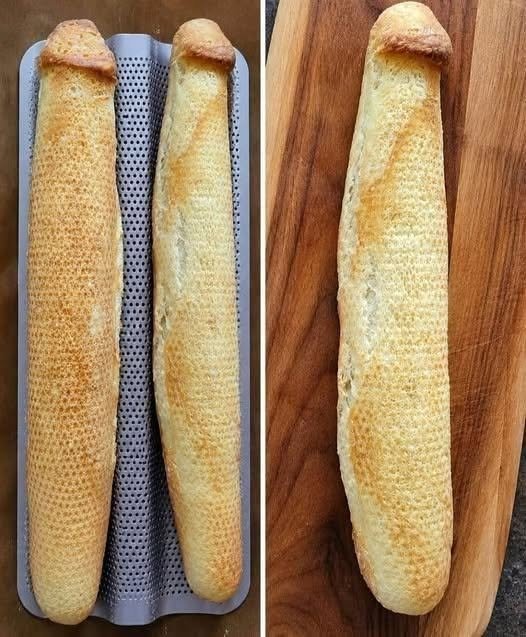
These homemade French baguettes are crisp on the outside, light and chewy inside, and wonderfully fragrant. They are perfect for serving fresh from the oven with butter or using throughout the day for sandwiches and meals.
Once you become comfortable with the dough, shaping, scoring, and baking process, making baguettes at home becomes a rewarding and delicious baking project.