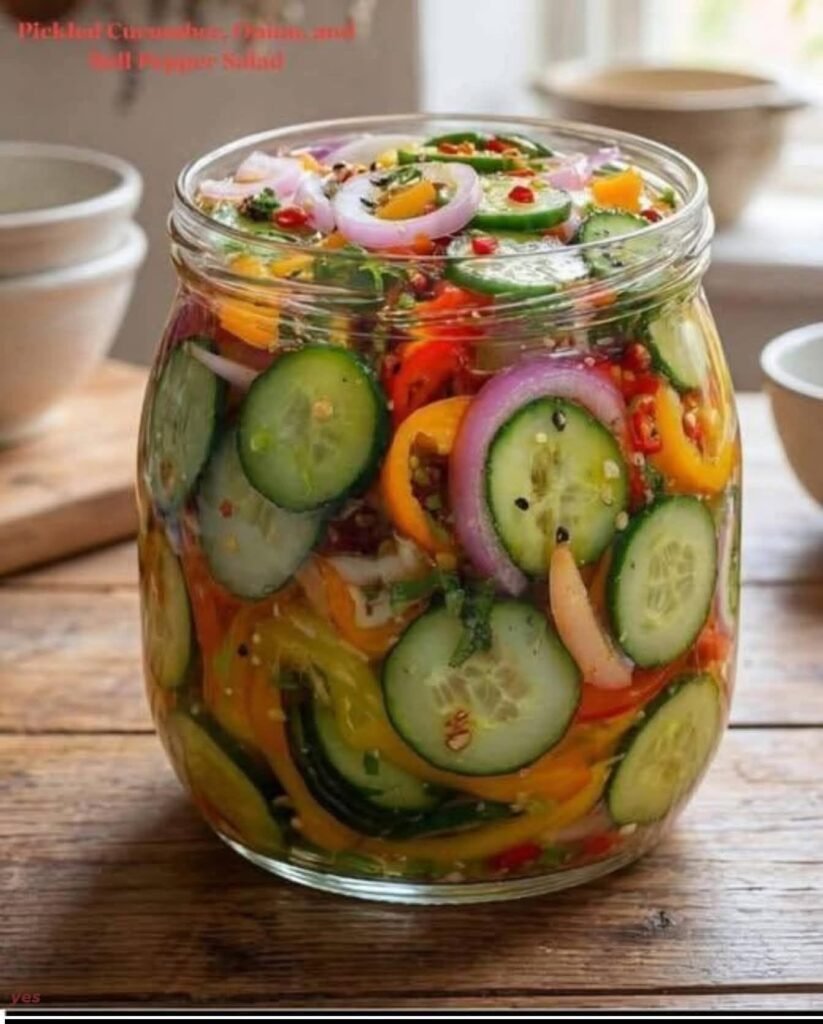

Pickled Vegetable Slaw Recipe
Ingredients
For the vegetables
- 4 cups finely shredded green cabbage
- 1 cup finely shredded red cabbage
- 2 medium carrots, peeled and cut into thin matchsticks or grated
- 1 small red onion, thinly sliced
- 1 small cucumber, thinly sliced
- 1 small red bell pepper, thinly sliced
- 1 small green bell pepper, thinly sliced
- 1–2 fresh green or red chilies, thinly sliced, optional
- 2 tablespoons chopped fresh coriander or parsley
- 1 tablespoon sesame seeds, optional
For the pickling dressing
- 1 cup white vinegar or apple cider vinegar
- ½ cup water
- 3 tablespoons granulated sugar
- 1½ teaspoons salt
- 1 teaspoon mustard seeds
- ½ teaspoon black peppercorns
- ½ teaspoon cumin seeds
- 1 small garlic clove, finely minced
- 1 bay leaf
- 2 tablespoons olive oil or another neutral oil
Instructions
1. Prepare the vegetables
Begin by washing all the vegetables thoroughly and drying them well. Excess water can dilute the pickling dressing, so it is worth taking a moment to dry the vegetables before slicing them.
Finely shred the green and red cabbage. The thinner the cabbage is sliced, the more quickly it will absorb the vinegar dressing. Peel the carrots and cut them into thin matchsticks, or grate them if you prefer a softer texture.
Thinly slice the red onion, cucumber, and bell peppers. If you enjoy spicy food, add one or two thinly sliced fresh chilies. For a milder slaw, remove the seeds and membranes from the chilies before slicing.
Place all the prepared vegetables in a large mixing bowl. Add the chopped coriander or parsley and toss everything gently to distribute the vegetables evenly.
2. Make the pickling dressing
Pour the vinegar and water into a small saucepan. Add the sugar, salt, mustard seeds, black peppercorns, cumin seeds, minced garlic, and bay leaf.
Place the saucepan over medium heat and stir until the sugar and salt dissolve completely. Bring the mixture just to a gentle simmer. There is no need for a vigorous boil.
Remove the saucepan from the heat and let the mixture cool for about 5 minutes. Remove the bay leaf.
The warm dressing helps the vegetables absorb the pickling flavors, but it should not be boiling when poured over delicate vegetables such as cucumber.
3. Combine the slaw
Pour the warm pickling dressing over the vegetables. Add the olive oil and toss everything thoroughly with clean hands, salad servers, or two large spoons.
Make sure the dressing reaches the cabbage and vegetables throughout the bowl. At first, the vegetables may appear to have too much volume, but they will soften and shrink slightly as they marinate.
Taste a small amount and adjust the seasoning if necessary. You can add a little more sugar for sweetness, vinegar for extra tang, or salt for a stronger savory flavor.
4. Let the vegetables pickle
Cover the bowl and place it in the refrigerator for at least 30 minutes. For the best flavor, allow the slaw to rest for 2–4 hours.
If you prefer a stronger pickled flavor, refrigerate it overnight. The cabbage and carrots will become more flavorful while still retaining some crunch.
Before serving, toss the slaw once again. Sprinkle with sesame seeds and additional fresh coriander or parsley if desired.
Serving Suggestions
Pickled Vegetable Slaw is extremely versatile. Serve it as a refreshing side dish with grilled chicken, roasted meat, kebabs, burgers, sandwiches, or fried foods. Its acidity is particularly useful for balancing rich and fatty dishes.
You can also spoon the slaw into tacos, wraps, or pita bread. It makes an excellent topping for pulled meat sandwiches and can add brightness to rice or noodle bowls.
For a more substantial salad, add roasted peanuts, sunflower seeds, chickpeas, or cooked noodles. You can also mix in thinly sliced green mango for a fruity, tangy variation.
Recipe Variations
There are many ways to customize this slaw according to your taste.
For a sweeter version, increase the sugar to 4 tablespoons and add a handful of raisins or thinly sliced apple.
For a spicy version, add sliced jalapeños, red chilies, or a pinch of crushed chili flakes. A little grated ginger can also give the dressing a warm, aromatic character.
For an Asian-inspired variation, replace half the olive oil with toasted sesame oil and add a teaspoon of grated fresh ginger. A small amount of soy sauce can also be added, although you should reduce the salt because soy sauce is naturally salty.
For a South Asian-style slaw, add a pinch of turmeric, extra cumin seeds, chopped green chili, and fresh coriander. A little grated ginger works particularly well with these flavors.
You can also replace some of the cabbage with thinly sliced radishes, cauliflower, or daikon. Experimenting with different vegetables is one of the easiest ways to make this recipe your own.
Storage
Store the finished Pickled Vegetable Slaw in a clean, airtight container in the refrigerator. It is best enjoyed within 3–5 days for maximum freshness and crunch.
Always use clean utensils when serving the slaw, and keep it refrigerated rather than leaving it at room temperature for extended periods. This recipe is intended as a refrigerator quick-pickle, not as a shelf-stable canned pickle.
Tips for the Best Pickled Vegetable Slaw
The key to excellent slaw is maintaining a balance between acidity, sweetness, saltiness, and crunch. Slice the vegetables thinly and evenly so that they pickle at approximately the same rate.
Do not overcook the dressing. The goal is simply to dissolve the sugar and salt and release the flavors of the spices. Boiling the dressing for too long can make the finished slaw softer than desired.
If you want exceptionally crisp cabbage, soak the shredded cabbage in ice water for 10–15 minutes before draining and drying it thoroughly. This helps restore its crunch before pickling.
Finally, remember that the flavor develops with time. A freshly mixed slaw will taste sharp and bright, while an overnight version will have a deeper, more rounded pickled flavor.
This Pickled Vegetable Slaw is an easy make-ahead recipe that turns ordinary vegetables into a vibrant, crunchy, tangy side dish. With its colorful appearance and refreshing acidity, it is an excellent addition to everyday meals, barbecues, picnics, and special gatherings.