
Ingredients
For the Sourdough Dough
- 500 g bread flour or strong all-purpose flour
- 350 g water, lukewarm
- 100 g active sourdough starter
- 10 g salt
- 10 g olive oil, optional
For the Pizza Topping
- ½ cup pizza or tomato sauce
- 200–250 g mozzarella cheese, shredded or sliced
- 1–2 tablespoons olive oil
- Dried oregano, to taste
- Fresh basil, optional
- Sliced bell peppers, optional
- Mushrooms, optional
- Olives, optional
- Cooked chicken or other favorite toppings, optional
Step 1: Prepare the Starter
Make sure your sourdough starter is active and bubbly before beginning. A healthy starter should have risen noticeably after feeding and should smell pleasantly tangy.
If your starter has been stored in the refrigerator, feed it and allow it to become active before making the dough.
Step 2: Mix the Dough
Add the water and active sourdough starter to a large mixing bowl.
Stir until the starter is mostly dissolved in the water.
Add the flour and mix until there are no large dry patches of flour remaining. The dough will look rough and sticky at this stage.
Cover the bowl and let the mixture rest for about 30 minutes.
Step 3: Add the Salt
Sprinkle the salt over the dough.
If using olive oil, add it now as well.
Mix and squeeze the dough gently with your hands until the salt is evenly incorporated.
The dough may feel sticky, but that is normal.
Step 4: Strengthen the Dough
Instead of traditional kneading, sourdough pizza dough can be strengthened with stretch-and-folds.
Wet your hands slightly, grab one side of the dough, stretch it upward, and fold it over the center.
Turn the bowl and repeat.
Continue around the dough until you have completed one set.
Cover the dough and rest for about 30 minutes.
Repeat the stretch-and-fold process 3–4 times, resting about 30 minutes between each set.
As the dough develops gluten, it should become smoother, stronger, and more elastic.
Step 5: Bulk Fermentation
Cover the bowl and allow the dough to ferment at room temperature.
Depending on the temperature of your kitchen and the strength of your starter, this can take approximately 4–8 hours.
Look for the dough to become noticeably lighter and slightly expanded. You do not necessarily need to wait for it to double.
Warmer kitchens will usually ferment the dough faster, while cooler kitchens will take longer.
Step 6: Divide the Dough
Lightly flour your work surface.
Turn the dough out carefully.
Divide it into 2 or 3 equal portions depending on the size of pizza you want.
Shape each portion into a smooth ball by gently folding the edges underneath.
Place the dough balls into lightly oiled containers or a covered tray.
Step 7: Cold Fermentation
For deeper sourdough flavor, place the covered dough balls in the refrigerator.
Allow them to rest for approximately 12–48 hours.
This longer fermentation gives the dough more flavor and can create a beautifully airy crust.
When you’re ready to make the pizzas, remove the dough from the refrigerator and allow it to sit at room temperature for about 1–2 hours.
Step 8: Preheat the Oven
Pizza needs a very hot oven.
Preheat your oven to its highest suitable temperature, ideally around 250–280°C if your oven allows.
Place a pizza stone or baking steel inside while the oven preheats.
Allow the stone or steel to heat thoroughly for at least 30–45 minutes.
If you don’t have a pizza stone, a heavy baking tray can also work. Turn it upside down so the pizza can slide onto the flat surface.
Step 9: Shape the Pizza
Take one dough ball and place it on a lightly floured surface.
Gently press the center of the dough with your fingertips.
Work outward while leaving a slightly thicker border around the edge.
Carefully stretch the dough into a round pizza shape.
Avoid using a rolling pin if you want a light, airy crust because rolling can push out some of the gas created during fermentation.
Aim for a thin center with a slightly thicker rim.
Step 10: Add the Sauce
Transfer the dough to a pizza peel or piece of parchment if needed.
Spread a thin layer of tomato sauce over the center.
Do not add too much sauce because excessive moisture can make the crust difficult to crisp.
Leave a small border around the edge.
Step 11: Add Cheese and Toppings
Sprinkle mozzarella evenly over the sauce.
Add oregano and a small drizzle of olive oil.
Add your favorite toppings.
For example, you can use:
- Mushrooms
- Bell peppers
- Olives
- Cooked chicken
- Onions
- Fresh basil
- Tomatoes
- Spinach
Try not to overload the pizza. A moderate amount of toppings helps the crust bake properly.
Step 12: Bake
Carefully transfer the pizza to the preheated pizza stone, steel, or hot baking tray.
Bake for approximately 6–12 minutes, depending on your oven temperature and the thickness of your pizza.
The crust should become golden and crisp around the edges, while the cheese should be melted and lightly browned.
If your oven has a suitable broiler or grill function, you can briefly use it at the end for extra browning. Watch it carefully because the pizza can brown very quickly.
Step 13: Finish the Pizza
Remove the pizza from the oven and let it rest for a minute or two.
Add fresh basil, a drizzle of olive oil, or a sprinkle of oregano.
Slice and serve while hot.
🍅 Easy Homemade Pizza Sauce
For a quick sauce, combine:
- ½ cup crushed tomatoes
- 1 tablespoon olive oil
- ½ teaspoon dried oregano
- ¼ teaspoon garlic powder
- A small pinch of salt
- A little black pepper
Mix everything together.
There is no need to cook the sauce before using it if you’re using a good-quality crushed tomato.
🧀 Best Cheese for Sourdough Pizza
Mozzarella is the classic choice because it melts beautifully.
For extra flavor, you can combine mozzarella with a little Parmesan.
Fresh mozzarella also works well, but drain excess liquid before placing it on the pizza so the crust doesn’t become soggy.
🔥 Tips for a Crispy Sourdough Pizza
1. Use an active starter.
A lively starter helps the dough ferment properly and creates a lighter crust.
2. Don’t rush fermentation.
Sourdough develops flavor with time. A longer cold fermentation can give the pizza a more complex taste.
3. Preheat your oven thoroughly.
A properly heated pizza stone or steel helps the bottom of the crust cook quickly.
4. Don’t overload the pizza.
Too many toppings can release moisture and prevent the crust from becoming crisp.
5. Don’t roll the dough.
Gently stretching the dough helps preserve the bubbles formed during fermentation.
6. Use less sauce.
A thin layer is usually enough.
7. Bake immediately after topping.
Once the pizza is assembled, get it into the hot oven rather than letting it sit for a long time.
🌿 Delicious Topping Ideas
Classic Margherita
Tomato sauce, mozzarella, fresh basil, olive oil, and oregano.
Garlic Mushroom
Tomato sauce, mozzarella, mushrooms, garlic, oregano, and Parmesan.
Chicken Pizza
Tomato sauce, mozzarella, cooked chicken, bell peppers, onions, and oregano.
Vegetable Pizza
Tomato sauce, mozzarella, mushrooms, peppers, onions, spinach, and olives.
Four-Cheese Style
Mozzarella combined with small amounts of Parmesan and other melting cheeses.
🥖 How to Store Leftover Dough
If you don’t want to bake all the dough at once, keep the unused dough balls covered in the refrigerator.
For best results, use them within a couple of days.
You can also freeze shaped dough balls. Place them in an airtight freezer-safe container and thaw them in the refrigerator before allowing them to come to room temperature.
🍕 Final Result
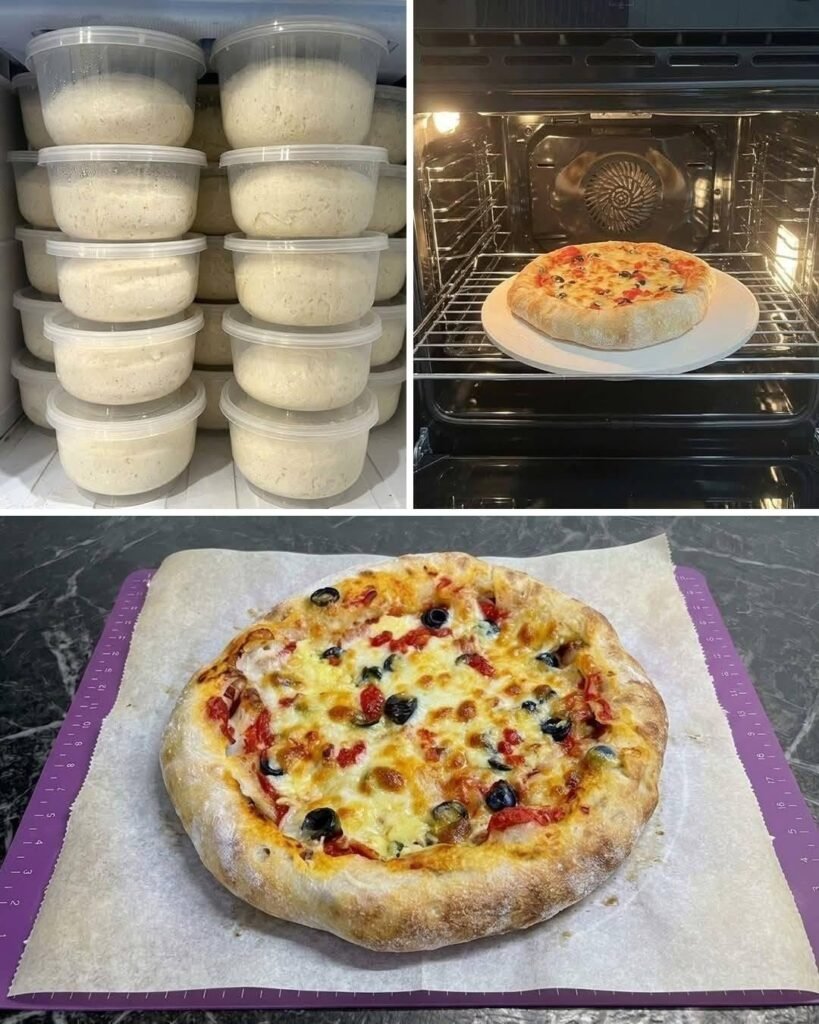
The finished sourdough pizza should have a crispy bottom, golden edges, chewy center, melted cheese, and delicious fermented flavor.
The key to excellent sourdough pizza is patience. Give your dough enough time to ferment, use a very hot oven, and keep the toppings balanced. Once you get comfortable with the basic dough, you can experiment with different flours, fermentation times, sauces, cheeses, and toppings to create your own favorite homemade pizza.